

I think I see the Pixar movie Cars through a different lens.
Most people, I suspect, see a fun kids movie featuring the antics of a bunch of cartoon automobiles, voiced by actors like Larry The Cable Guy, who played one of the movie’s central characters, Mater the tow truck.
I see Cars as a sort of biopic about the lingering social and emotional effects of economic policies that have led to rural decline over the past 60 or so years, and the way those policies have affected the view of ourselves and interfered with our ability to craft a better future for our communities.
On March 3, Hutchinson voters will decide whether .75 percent in new sales tax goes on the books. Voters are being asked to support the sales tax increase to avoid property tax increases and cuts to local services and infrastructure - and as a way to ensure that our city has the resources to do more than manage our own slow and agonizing death.
It faces a tough uphill battle.
Partly because families are having the lives squeezed out of them in nearly every way, partly because of some unearned errors ahead of the vote rollout, and partly because of a well-built political machine that has for decades deployed policy to sabotage our communities and then pushed all that anger and frustration from the federal and state level - where it rightly belongs - to the good men and women who volunteer to serve on their local city, county and school governing bodies.
Rural communities in Middle America have been hollowed out since at least the 1970s. Most counties in Kansas saw their peak population before the 1920s, as the world moved away from agriculture-based economies and toward industrial economies. Towns and mid-sized cities across Kansas, and the country, struggled to hold their communities together while international trade policies, corporate consolidation, Wall Street greed, and mechanized and automated manufacturing processes eroded our wealth, our futures, and our hope.
Yet, there has been a resurgence in some rural towns across the country. I’ve traveled all over Kansas, and there are communities that possess a renewed sense of hope. They have active and busy downtowns. New homes are under construction. Industrial parks are filling up, and people are choosing to leave the abundant amenities of urban life to seek a quieter, perhaps more fulfilling, life in Rural Kansas.
There’s one key difference between those towns, and the places that are managing their own slow and bitter deaths: The communities that will thrive in the 21st Century like and believe in themselves. They believe that they have agency in what their communities can become, and they like themselves enough to try.
Sometimes it seems to me that Hutchinson doesn’t like itself very much. And the chatter from the “Always No” crowd shows that a lot of us view our community’s future as a predestined, slow, depressing, multi-generational loss that can’t ever be altered.
Earlier in the week, I attended a public meeting about the upcoming vote. During the meeting, there was a question about what cuts were being made to “parks, the zoo, the golf course, and other quality of life” amenities.
The question struck me as odd, because who would want to live in a place with a poor quality of life? I get that some people might be happy hiding out in their homes all the time, or maybe have the money for big chunks of land upon which they can live out all their family’s dreams. But most of us need roads, clean water, functioning sewers, parks, trails, green spaces, and smart, planned development and the such, to help us feel like we’re living in a vibrant community.
Furthermore, the reality is that people largely make decisions about where to live based on whether a community offers what they require to live the life they desire. Companies, in turn, partly make decisions about where to set up shop based on whether they can find the quality work force they will need.
Good luck turning the tide on our declining population, fun places to shop, and lack of good paying jobs by reducing our city to a bland, flavorless, and soulless wasteland of mere survival.
At some point, the city manager asked the audience if they thought that Hutchinson, in its current form, was the best that it could ever be. Was this, he asked, the peak of our community’s existence?
And that hits at the heart of the matter.
Hutchinson has lost a lot, and it would be foolish to pretend that’s not the case. Companies that long provided good jobs for families shuttered their plants long ago, attracted to places like Mexico or China, where the labor is cheaper and the profits are bigger. Popular retailers have abandoned us for the ease of online, or the shopping volume and variety offered just up the road in Wichita. Many of our children have left town, taking their families somewhere far away for better opportunities.
We feel that loss, the distance from our loved ones, and the memory of our abandoned dreams deep in our bones.
All the while, local leaders have done their best to manage our city amidst a steady, persistent decline that was never unique to Hutchinson - but pervasive throughout rural America. They pushed some problems off to the future, while addressing the most immediate needs of the day to find the right balance between austerity and investment to satisfy residents’ demands.
The prevailing argument now seems to be that we’ve spent too much, we’ve been too careless, and that we’ve been frivolous with taxpayer’s money. I would argue that the reality is that we’ve been far too cheap for far too long.
When voters were asked in the 1990s to decide the fate of Memorial Hall, they had two options - tear it down, or fix it up so that it would be fully usable. Voters rejected both options, dooming the city to a generation of upkeep and minimum maintenance that ultimately cost the city’s taxpayers more than either of the earlier options.
When stormwaters filled residents parked cars and breached Main Street store fronts roughly two decades or so ago, the public demanded improvements to our storm water drainage systems that hadn’t been significantly updated for 100 years. The stormwater fee was implemented and expanded to meet an urgent need at the demand of residents - to address an issue that had been neglected for most of city’s history.
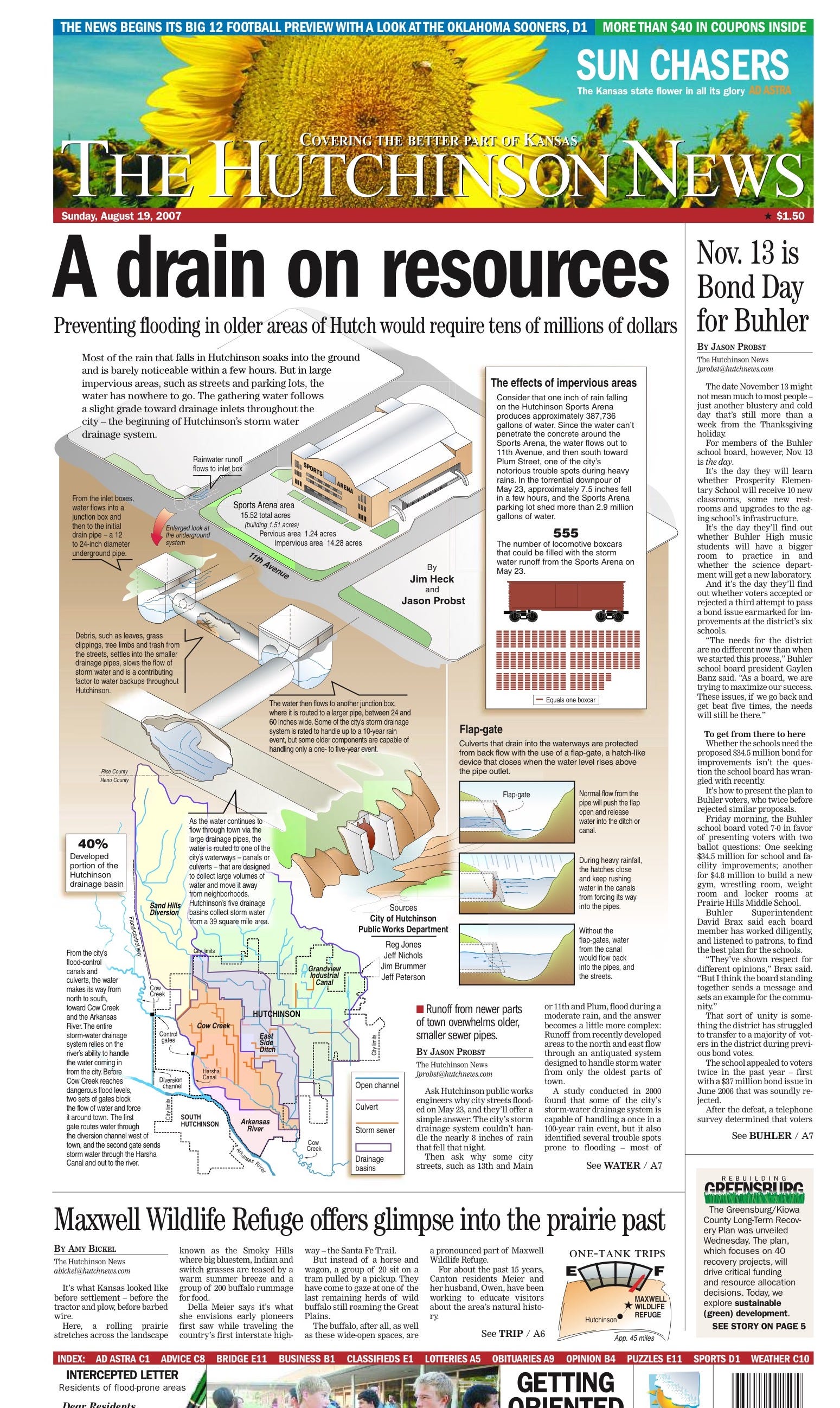
It’s worth noting the sales tax proposed in this vote, if approved, would eliminate that stormwater fee, saving homeowners more than $60 per year, and businesses even more. Moreover, it provides the city with more flexility - currently the storm water fee can only be used to fund stormwater improvements and can’t be used for something as common sense as fixing the road afterwards that was dug up to reach the storm water system.
There are countless examples of when our collective cheapness has cost us more in the long run. The paradox of excessive austerity is that it often ends up costing everyone more in the end. We know this in our individual lives - we can save money today by not changing the oil in the car or pay for the blown engine later. Don’t repair the leaky pipe now, or deal with the rotten wood way down the road.
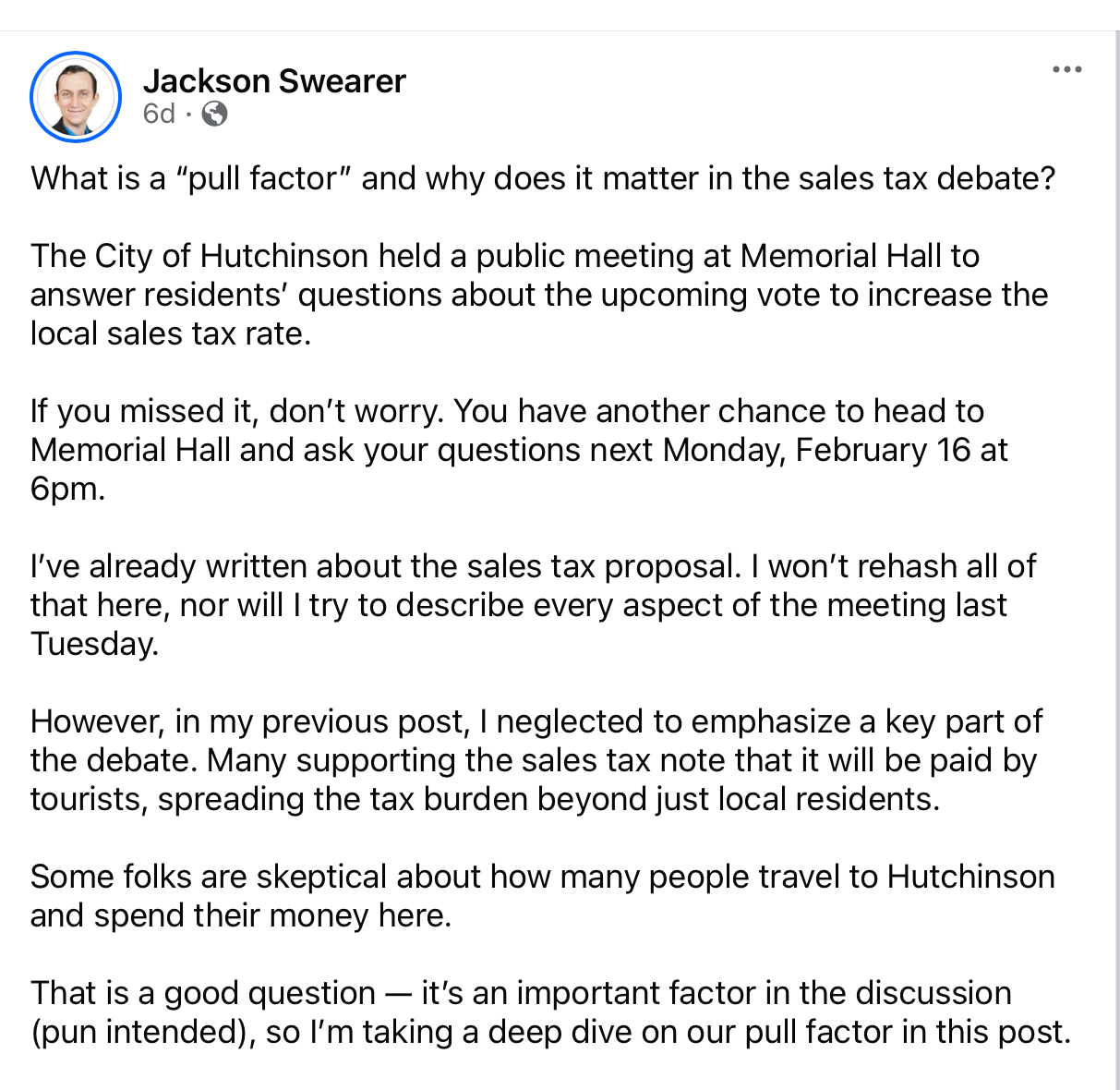
I’m not going to work to move you one way or the other on this vote. I’ll just tell you that a few weeks ago, I was inclined to vote against it and today I’m likely to support it. If you like policy and want to read a very good and thorough explanation of the logic behind the sales tax vote, I highly encourage you to read this, by Jackson Swearer. He gets into deeper detail that does a great job explaining how a sales tax draws resources from outside our community.
You can also go watch this video and hear directly from city council and staff who did a nice job answering the public’s questions.
I just hope when you make your decision it’s based on the real information surrounding the actual issues we face in this moment - and not because you’re bent out of shape about something that turns out to not actually be true at all. Or because you’re mad at the wrong the people. Or because you’re holding some old grudge from back in your middle school days. Or because some craven politician has told you everything you ever wanted to hear. Or because you see this as a “my team” versus “their” team issue.
I don’t like taxes anymore than the next guy. I probably dislike them more, actually - especially when they fall on working and poor families. I am of the belief that if we taxed uber wealthy people an appropriate amount, maybe the rest of us wouldn’t feel the squeeze quite so much. In fact, not long ago, I wrote about how such greed at the top is even making it hard for otherwise well off people to maintain their level of wealth.
I also don’t like that our communities are now expected to carry the burden of carving a path through an uncertain future while oligarchs, crooked politicians, and their sex offender friends openly bask in the grift of their ill-gotten gains. The future wellbeing of many of our communities has been left behind by decades of globalism, corporate consolidation, the economics of greed - and a religious/political complex that creates culture wars that cultivate fear so that callous corporate interests can control our governing bodies at the state and federal levels.
Meanwhile, the small business owners, farmers, mothers, and fathers who make up our local elected bodies are forced to endure unfair wrath from the general public - who feel the growing strain of life while lacking the time or energy needed to fully participate in our government or its workings.
But never forgot that the people who serve at the local level aren’t separated from the decisions they are asked to make. They own homes here, shop here, raise their kids here, and engage in our community.
In this case, they’ve submitted the issue to voters and will respond accordingly however the vote turns out. If voters approve the tax, they’ll move ahead with planned investments. If not, they’ll do what leaders before them have done and return to the unenviable work of cutting our city’s budget, while also meeting the public’s expectations for functioning water systems, road maintenance, etc.
I like Hutchinson. I love it, actually, despite its many faults and flaws.
I believe that our community has a future that will be determined by our view of its possibility. I believe we possess the agency to be one of those communities that thrives in the 21st Century.
Hutchinson will have a future. This town will still be on the map 100 years from now. And whatever that future looks like is ours alone to determine.
If we believe our future is loss and eventual death, that is the future we will secure and create for ourselves.
I’d like to try something different for a change.
Excellent, Jason. The sales tax vote coming up in Wichita on March 3 isn't at all the same as the sales tax vote coming up in Hutchinson on March 3, but there are more similarities than differences, I think, and your reflections--about hope, trust, confidence, etc.--unintentionally highlight them. I rambled through my thoughts on our sales tax vote (I'm in the "yes" camp) here: https://mittelpolitan.substack.com/p/why-ill-vote-yes-on-wichitas-sales
Really well written, Jason!