
The Sound of Music
If we listen, artists have long tried to help us better understand our world

Listen closely, and you can hear the ways music has always tried to tell us more about the reality of the world.
That was true in the 1930s when Billie Holliday sang Strange Fruit, a haunting song about the lynching of black men in the South.
Southern trees bear strange fruit
Blood on the leaves and blood at the root
Black bodies swinging in the southern breeze
Strange fruit hanging from the poplar trees
Woody Guthrie, along with a host of Americana folk singers, helped shape our view and understanding about international fascism, and gave us insight into the pervasive poverty and struggles of working families - propped up for all of history by self-serving systems.
Jesus Christ was a man who traveled through the land
Hard working man and brave
He said to the rich, "Give your goods to the poor."
So they laid Jesus Christ in his grave.
It was true in 1969 when Credence Clearwater Revival gave us Fortunate Son - blending word and song to give life to what we always knew about who fights wars, and why.
Some folks are born silver spoon in hand
Lord, don't they help themselves, Lord?
But when the taxman come to the door
Lord, the house lookin' like a rummage sale, yeah
And of course, War Pigs by Black Sabbath.
Politicians hide themselves away
They only started the war
Why should they go out to fight?
They leave that role to the poor
In the 1980s, Rap artists tried to tell us all about the reality of black life in Urban America.
Bands like NWA explicitly told us about the feeling of being racially profiled and mistreated by law enforcement, and groups like Wu-Tang Clan spelled out how economic disparities and systemic failures shaped their view of life and survival.
Cash rules everything around me
C.R.E.A.M., get the money
Dollar dollar bill, y'all
Cash rules everything around me
C.R.E.A.M., get the money
Dollar dollar bill, y'all
In the 1990s and early 2000s, groups like Rage Against the Machine and System of a Down shouted about the growing concentration of wealth in a few hands, the corrupting social effects of greed and power, and, again, the reality of wars.
Weapons not food, not homes, not shoes
Not need, just feed the war cannibal animal
I walk the corner to the rubble that used to be a library
Line up to the mind cemetery now
What we don't know keeps the contracts alive and movin'
They don't gotta burn the books they just remove 'em
While arms warehouses fill as quick as the cells
Rally 'round the family, pockets full of shells
Why don't presidents fight the war?
Why do they always send the poor?
Why don't presidents fight the war?
Why do they always send the poor?
Closer to today, artists like Childish Gambino and Kendrick Lamar - and that’s not even a fair start - have carried on the long American tradition of putting into song truths we’d be more comfortable not ever knowing.
Alls my life, I has to fight, ****
Alls my life, I—
Hard times like, "Yah!"
Bad trips like, "Yah!"
Nazareth
I'm f****d up, homie, you f****d up
But if God got us, then we gon' be alright
For the past several years, I’ve noticed more songful warnings from folk and Americana artists. It’s worth really listening to what they’re trying to tell us - because it provides a great deal of insight and understanding about the way a lot of people are navigating today’s economy.
A few years ago, folk-country musician Oliver Anthony caught a lot of grief for his song “Rich Men North of Richmond,” which leveled an insult at families on public assistance - basically singing that people with obesity on welfare were milking the system and taking resources from hard working people.
While I think that view fails to lay blame where it rightly belongs, it is a common complaint among people who work hard to make ends meet. Despite his unfair characterization of public assistance, I understood his primary aim was at the sense of hopelessness many working families feel every day - and the politicians in Washington D.C. who have done nothing to alleviate that feeling.
“I’ve been selling my soul working all day
Overtime hours for bullshit pay
So I can sit out here and waste my life away
Drag back home and drown my troubles away”
That brings me to Jesse Welles, an emerging folk artist who has been singing about economic disparity and his view on government, fairness, and systemic abuses.
I woke up this morning and heard a performance of his song “The Poor.” It felt like a personal anthem for how I have felt many times, particularly in my younger life, and I believe, it penetrates straight to the heart of what many people have felt in this country for the better part of a generation. Most likely, much longer.
If you worked a little harder
Then you’d have a lot more
So the blame and the shame’s on you
For being so damn poor
It ain’t the price gouging
It ain’t the inflation
It ain’t everyone above ya tryna make a buck from ya
And screwin the whole congregation
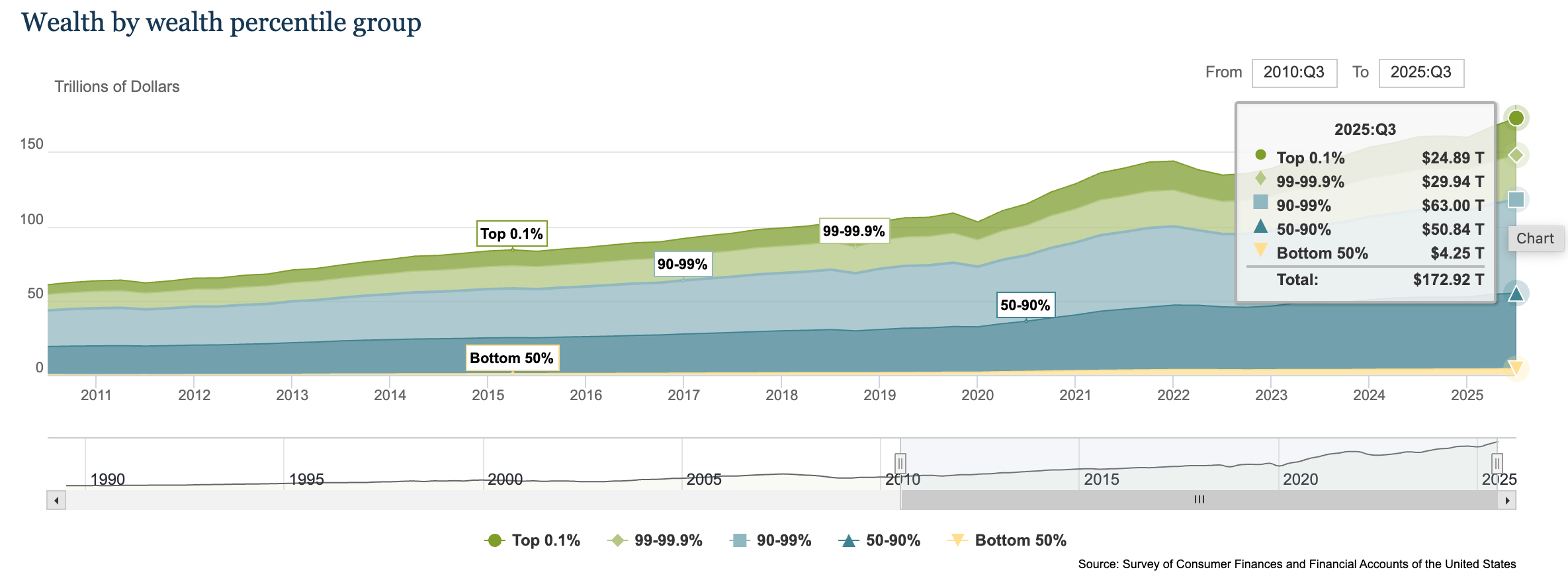
While musicians across genres have been singing about this sort of thing for years, the message in these songs is factually supported with economic data showing we are experiencing what’s known as a “K-Shaped” economy - after years of stalled incomes, reduced spending power, and obscene concentration of wealth.
Here’s a fun explanation
Here’s a more in-depth newsy version. But this quote from the story really hits the core of this issue:
“Those at the bottom are living with the cumulative impacts of price inflation,” said Peter Atwater, an economics professor at William & Mary in Virginia. “At the same time, those at the top are benefiting from the cumulative impact of asset inflation.”
Or, as folk artists and my elders have always told me, “The Rich get richer and the Poor get poorer.”
What stuck me most about Welles song is the way it speaks to how our culture has long viewed anything other than wealth as a failure, and poverty as a moral weakness or failing, while completely ignoring the exploitive systems that make it nearly impossible for most people to climb out of poverty.
In fact, I’d argue that not only do we ignore those realities, we have crafted a mythology about how anyone, anywhere can achieve wild success, regardless of whatever station or economic condition they might have been born into, or whatever trauma, disabilities, or realities they encounter throughout their lives.
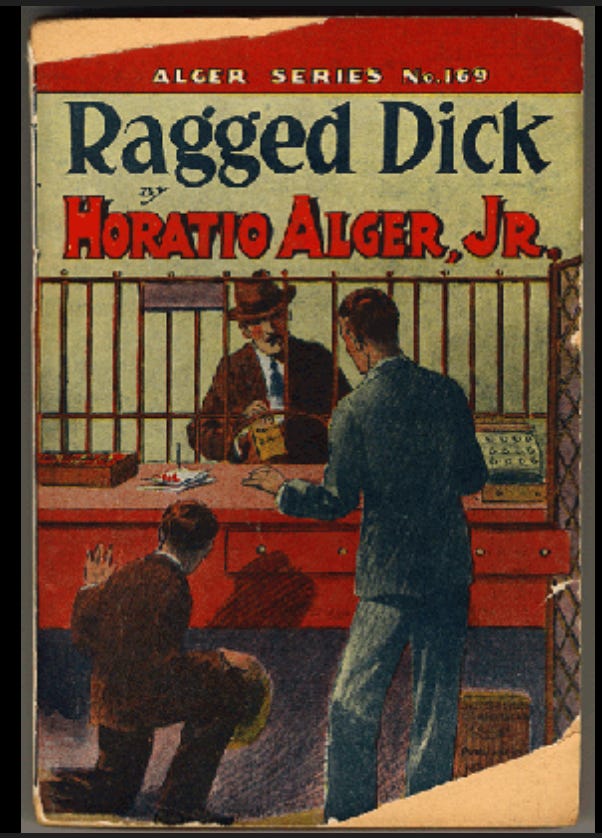
It’s true that people fight and claw their way out of poverty and that is cause for celebration. Yet if we continue to pretend as if such success is the norm and not the exception, those systemic challenges that have trapped poor folks for generations begin to trap the middle class, and the upper middle class - as we’ve experienced over the past 30 or 40 years. It feels like you are working harder to stay in the same place because that’s what has been happening since the 1970s.
If you don’t believe me, consider this: Walmart, the discount retail giant that made its name selling wares and goods to lower income Americans with its “Always Low Prices” now says households with incomes above $100,000 accounted for 75 percent of its increased market share gains last year.
Because even relatively high earners are now compelled to shop at Walmart, the company experienced a 28 percent rise in its share price over the last year and has passed $1 Trillion in market capitalization. The efforts we make to save money convert into higher profits for the wealthiest corporations and families in the world.
Unless you are in the top 10 percent of incomes in the United States (currently around $200,000 depending on geography) you are among the 90 percent of households feeding the growth at the top of the economy.
But I wouldn’t get too comfortable in that lofty space, either, because every resource can be exploited only so long before new exploration is required. The line will keep moving, just as it has for the past 40 or so years, and most of us are going to find ourselves on the wrong side of it eventually.
Welcome to the bottom leg of the K-Shaped Economy.
I don’t think you’re going to like it here.
But, hey, at least we make good music.
Shared widely, Jason. Thank you