
The Joke's on All of Us
From Washington to Topeka, that sweet, sweet government grift is THE point

I’m writing this on April Fool’s Day, and I wish that everything that follows was just a first-day-of-April folly.
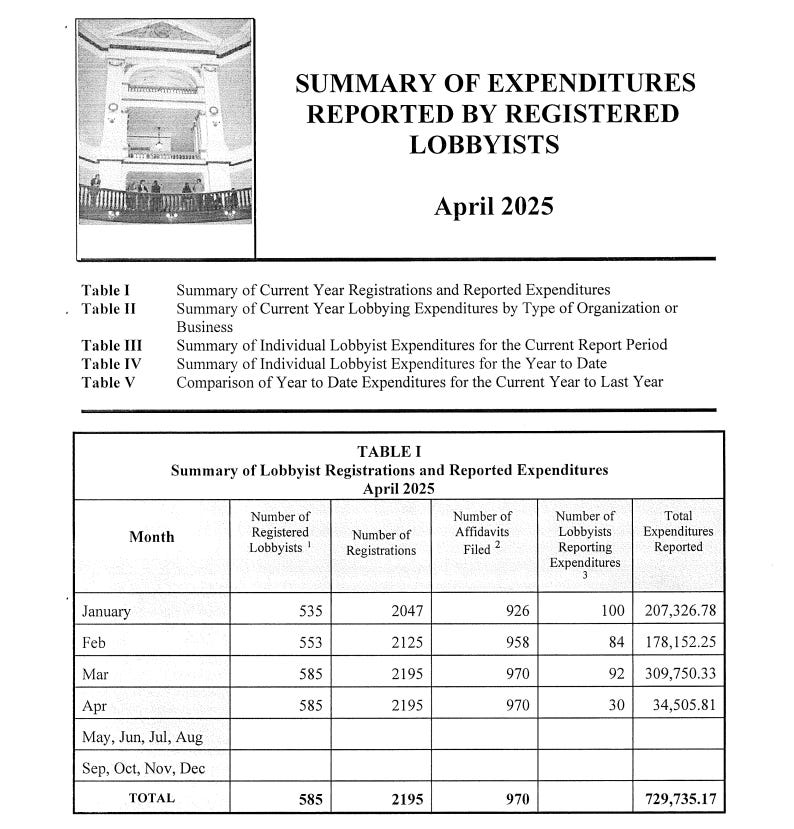
The sad and unfunny truth is that while you’re out here working and trying to feed your family and pay your bills, there’s an entire industry that serves itself - an interconnected web of players across the political spectrum who make their entire living on the manipulation and mechanisms of a government system that should be serving the interests of ordinary people.
Behind these state and federal representative governments there is a sort-of shadow government - people whose names, histories, motivations, and positions never see the light of day and who never face the scrutiny of voters. Yet they work the halls of congress, and Topeka, using money and influence to enrich themselves, and the special interests that employ them. They influence elections to seat people more likely to comply with their demands. They align themselves behind shared goals - and lean collectively on lawmakers to see the world their way.
And if they don’t, they’ll be warned that non-compliance can result in a primary challenge, a withdrawal of financial support for a campaign, and the likely smearing of your name and reputation come August or November.
Lobbying has always been designed to secure a benefit for one interest or another. But it has become its own self-serving and self-replicating industry, and as such, we’ve experienced an intense rise of a lobbying-government complex in which lobbyists have a vested interest in keeping friendly lawmakers in power, and where those lawmakers are incentivized to keep their industry friends satisfied.
The old scratch my back and I’ll scratch yours dynamic has grotesquely morphed; grifting the taxpayer is the goal and the purpose, be it through lucrative government contracts for supposedly good causes, or tax breaks and incentives for some business or another.
I was once told a story (though unconfirmed) from a good source about a lobbying firm in Topeka that had been courting a lucrative contract with a well-known national ride sharing company. At the time, states were starting to require higher insurance coverage for rideshare drivers, on account of them engaging in a commercial venture and driving more miles than the average person.
This firm hoped to represent this national company in Kansas to keep any such requirements from emerging in the Sunflower State. But Kansas being Kansas, the company decided there was little chance a conservative legislature would initiate any sort of business requirement on the company.
This lobbying firm, however, didn’t want to miss out on the opportunity to cash in on this payday - so they asked a friendly legislator to draft legislation that threatened to require higher insurance coverage. The bill had no chance of passing - it was a ruse the lobbyist could use to secure the contract, and the paycheck that came with it.
Similarly, when I served on the agriculture committee there was an interesting debate around the labeling of “meat analogs” - think Impossible Burger and other plant-based meat substitutes.
A representative for the beef industry at the time attempted to force state-level labeling requirements that would prevent such products from using the word or term “meat.” A member of the committee asked if that would create a hardship for this emerging industry, with different labeling requirements from state to state. The representative plainly stated that was the goal. Livestock groups across the country and at the national level hoped to create so much dysfunction in the market that it would force federal intervention to put limits on the market.
In Kansas, there are plenty of examples of this - and it’s not just from those typically viewed as the “bad guys.”
One year, while digging through the Kansas budget, I found a line item for $600,000 to a single non-profit in Wichita - a company that already benefits from a tax credit that’s billed as a way to employ people with disabilities, but that also helps offset tax liability for one of the country’s largest aerospace companies. I asked on the House floor why we were giving taxpayer money directly to a non-profit organization whose leadership team earned multi-million dollar salaries.
No one could give me an answer.
There are some truly dedicated and authentic and compassionate lobbyists who do the work for the right reasons, and whose hard work I value, though it often goes unrewarded. But there is also a corps of supposed “good guy” lobbyists who are more interested in securing their own contracts, and have for years taken money from passionate and concerned Kansans, while doing little more than cashing checks.
If you think I’m wrong, go down the rabbit hole of who quietly supported legislation last session to bring more money into Kansas politics. The allegiance was to money and power and the ability for lobbyists to have more control over elections.
This session has been rife with examples of grift:
Government at these levels has largely become a business. I used to comment that in the Capitol we could see a person bleeding out on the floor and no one in the building would lift a finger to help until we could find a way for someone to make a buck. If we believe the old free market adage that self-interest is what drives people forward, compels them to work, and fuels their efforts - then we must also acknowledge that our political system has been corrupted by industrialization.
Some people blame “the government” but that’s too simple. “The government” is little more than an extension of the people who control it. We like to think it’s voters who run the show, but more often than not, it’s the money.
The people working in this world might have wildly different views, they might serve diametrically opposed clients, but they all make their money from the same business model and have a vested interest in maintaining government dysfunction. Because if it ever works for people as well as it works for lobbyists, their means of income - which only exists in Capitol cities - would cease to exist.
The state level is problematic, but it’s reaching grotesque levels at the national level. Every day I get a news alert about some very direct conflict that a decade ago would have spelled political doom for the people involved. Nowadays, we just call it being good at business.
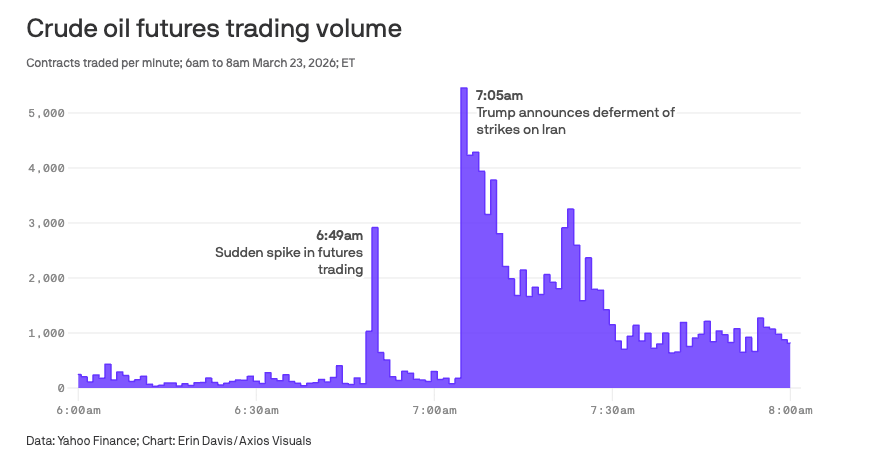
These suspicious trades in oil futures seem like they should be really hard to ignore.
Those things that could aid our lives and our society - real property tax relief, addressing healthcare costs, feeding hungry kids, rising energy expenses, containing insurance premiums, developing affordable housing - can’t seem to get much attention at all. Meanwhile, we’re never short of money for tax giveaways, lucrative sweetheart contracts, insider deals, government grift, and, of course, the never ending war machine.
So what’s the punchline?
We are.
Because the cruel joke is that we have the most representative form of government in the world, and it’s doing a really great job of representing how much we care about all the wrong things.
Keep up the good work, Jason!