
Part 1: A Kansas Kind of Courage
Kansas Senator Edmund G. Ross stood against his party and likely saved America

Author’s note: This is the first in a multi-part series about Edmund G. Ross, who served as a Senator for Kansas in the U.S. Congress from 1866-1871. I plan to publish a new part each day during the July 4th weekend marking America’s 250th birthday. I hope you’ll take the time to read each part of this important story about our state’s history - and share it with others. I think it’s an important story that speaks to our own moment in our nation’s future history.
There was once a time when Kansas raised up men of profound courage.
Men who refused to trade their values for temporary gain. Men who resisted forceful efforts to bend their will, who stood resolute despite attacks from the power of the majority. Men willing to stand firm in their ideals and suffer harm to their life, livelihoods, reputation, and wellbeing.
We’ll celebrate America’s 250th birthday this weekend, yet it’s a day that might never have happened at all, but for the men and women throughout our history who held in their souls the courage to stand against the prevailing winds of their day.
Our founding document - the Declaration of Independence - is a statement of overt defiance of the customs and norms of the time. It is a courageous statement in the idea that the moment must be met head-on, despite the risks, the dangers, or the unknowns.
To throw off the yoke of the British Empire, to say aloud one’s view of the world and its future, and to issue a direct warning to the crown violated every law and norm that existed in 1776. It was, in effect, treason. Yet our founders remained steadfast in their belief that “all men are created equal, that they are endowed by their Creator with certain unalienable Rights, that among these are Life, Liberty and the pursuit of Happiness.”
That the United States still exists 250 years later is owed to countless men and women throughout our history who wielded America’s spirit of defiance - who stood against overwhelming opposition, norms, expectations, and dire threats.
We don’t owe our existence to people who did the easy thing, the popular thing, or the most self-serving thing. We don’t owe our rich history to those who said this is how it’s always been done, nor to people who see public service as a gateway to grift and personal gain. Our strength and power never came from those who cowered, who complied, who abandoned their own souls so they might readily adopt the identity of another person, or group, upon which to stand.
We owe our continued existence - and our future if we’re to have one - to the people with courage to stand on their principles and convictions - especially when everyone says they were wrong.
We owe it to people like Kansas Senator Edmond G. Ross.
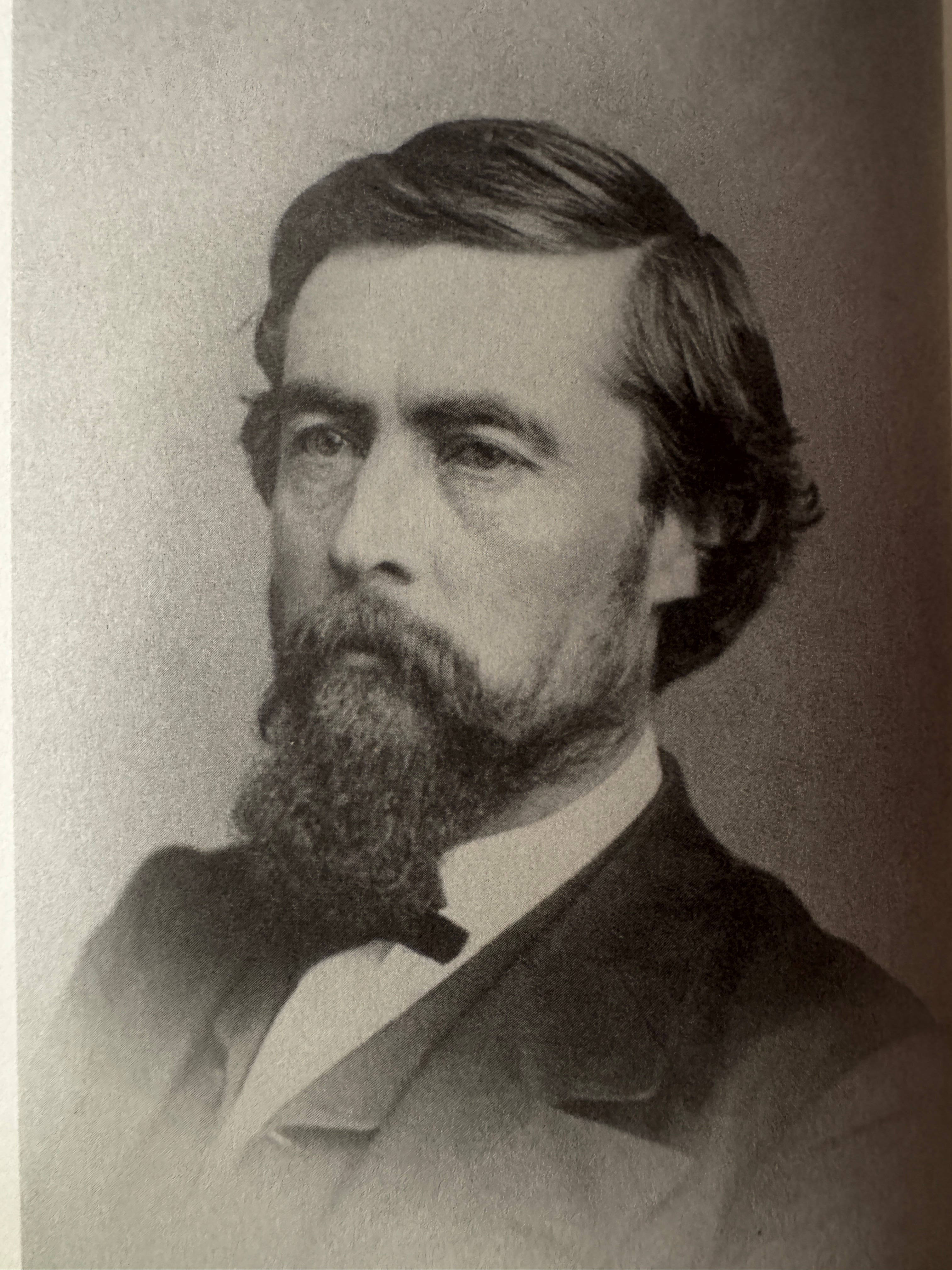
Kansas wasn’t yet a state but it already played a monumental role in the nation’s struggle over slavery. The term Bleeding Kansas described the violent skirmishes between Missouri and Kansas - rooted in the fight over whether future admissions to the Union would be free or slave states.
Sara Robinson, who became the first First Lady of Kansas, helped tell our story in her book “Kansas: Its Interior and Exterior Life, including a full view of its settlement, political history, social life, climate, soil, productions, scenery, etc.”
Published in 1856, it was considered among the most important books about the abolitionist movement. Its powerful language highlighted Kansas as the front line against the forces of slavery….
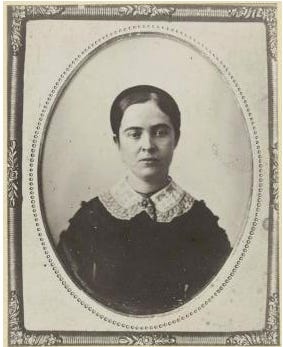
“Thus far shalt thou go, and no farther.” - Sara Robinson
“Most of us have come to this far-away land, with a mission in our hearts, a mission to the dark-browned race, and hoping here to stay the surging tide of slavery, to place the barrier which utters, in unmistakable language, “Thus far shalt thou go, and no farther.” This unlocks our hearts to each other, and at once we recognize a friend actuated by like sympathies and hopes.”
Ross lived and worked as a printer in Milwaukee, Wisconsin, but his fierce belief in abolitionist movement, and likely reading Robinson’s words, compelled him to uproot his family and start anew in Topeka, Kansas in 1856 - bringing other like-minded folks to make the move with him. He published the Topeka Tribune from 1856-1859 and established the Kansas State Record in 1859.
He quickly became an early leader in Kansas, and pivotal to its story. He came to Kansas specifically to serve the free state movement. Ross was a member of the Kansas Constitutional Convention from 1859-1861, and served as a director for the Atchison, Topeka & Santa Fe Railway, which connected him well to other Kansas leaders.
Ross also entered the Union Army in 1862, leaving with the rank of Major in 1865. He fought in several significant battles, including Westport and Mine Creek.
On July 19, 1866, Ross continued his service to Kansas as a U.S. Senator. Ross, a Radical Republican, was selected to replace Sen. James Lane after his death. Ross entered the Senate on the heels of the Civil War - a time when there was much contention, contempt, and lingering bitterness.
Ross was described as a somewhat quiet man who wasn’t inclined to rabble rouse or otherwise cause much trouble. He was well-liked and respected, dedicated to his work and service to Kansas and the cause of abolition, which defined the Radical Republican wing of his party.
Ross’s vote on May 16, 1868, to acquit President Andrew Johnson, a Democrat, in his impeachment trial changed the course of the United States, and profoundly affected his life.
By 1871 Ross would be voted out of office, disgraced, accused of corruption, patronage, bribery, infidelity, any number of wrongdoings - all because he put the wellbeing of the United States above his political identity, his reputation, his safety, and his future. Because he disregarded the threats and intimidation, and refused to place loyalty to party above his duty to country, as the Republican party bosses commanded.
Ross explained his position and his vote in a speech later that May.
“But I saw, or thought I saw, in the conviction and removal of the president upon inadequate testimony, and upon accusations mainly of a partisan character, the establishment of a precedent which would render every future President liable to successful impeachment whenever he found himself in a minority in Congress.”
Look for Part II - Ross Navigates the Impeachment of Andrew Johnson
I like the series so far. I also have to say that the resemblance is remarkable between the 2 of you. Not just in 1st glance physical appearance, but in the fact that he was "He was well-liked and respected, dedicated to his work and service to Kansas". Looking forward to the rest of the series.